All PDF Details And All in one Detail like Improve Your Knowledge
Wednesday, April 3, 2024
Dusty Feasts
Official feasts used to be an important part of the human community. People would gather together to remember something sacred, express their faith and hope for the future, and / or just be together formally, recognizing each other as being part of …
Official feasts used to be an important part of the human community. People would gather together to remember something sacred, express their faith and hope for the future, and / or just be together formally, recognizing each other as being part of a shared community. Few things express a desire for shared companionship and social intimacy more than dining together. Sadly, the gathering together for feasting is increasingly a relic of the past – at least here in the West.
It need not be so! Today we will remember the ancient feasts.
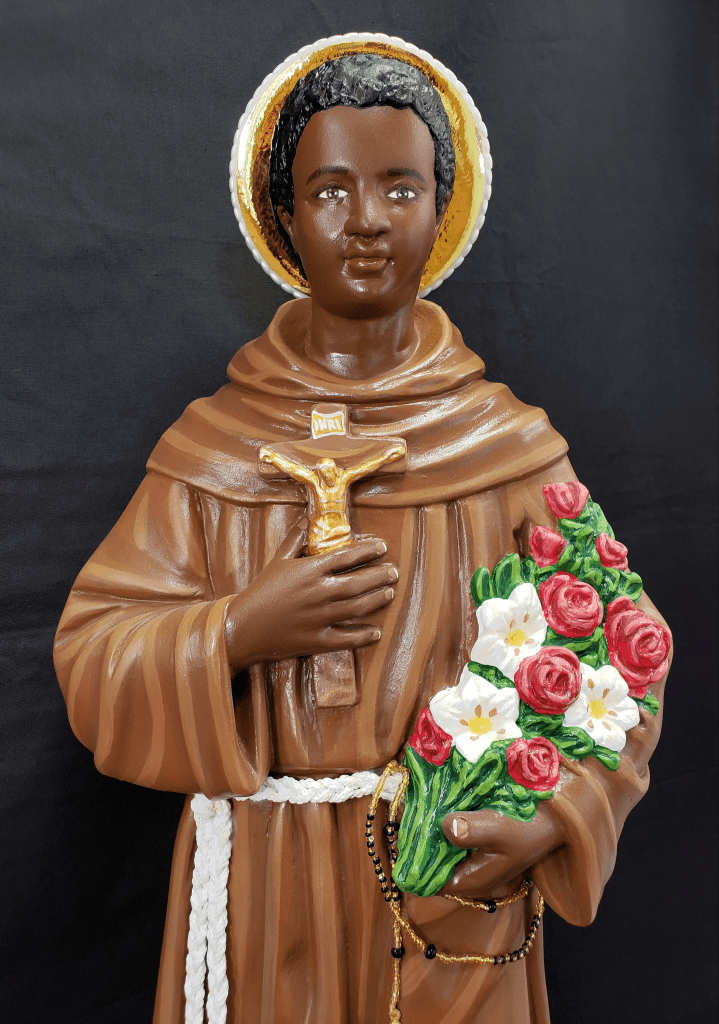
THE FEAST DAY OF St. Benedict the Moor
This Feast Day is a religious celebration that commemorates St. Benedict the Moor, sometimes referred to as St. Benedict the Black. He is a Patron Saint of African missions, African Americans, black missions, black people, Palermo, San Fratello, and Sicily.
Benedict the MoorOFM (Italian: Benedetto il Moro; 1526 – 4 April 1589) was a SicilianFranciscanfriar. Born of enslaved Africans in San Fratello, he was freed at birth and became known for his charity.
As a young man he joined a Franciscan-affiliated hermit group, of which he became the leader. In 1564 he was sent to the Franciscan friary in Palermo, where he continued good works. He died in 1589 and was canonized as a Catholic saint by Pope Pius VII in 1807.
Benedict was born to Cristoforo and Diana Manasseri, Africans who were taken as slaves in the early 16th century to San Fratello (also known as San Fradello or San Philadelphio), a small town near Messina, Sicily. They were given Italian names and later converted to Christianity. The Italian "il Moro" for "the dark-skinned" has been interpreted as referring to Moorish heritage. Because of his appearance, Benedict was also called Æthiops or Niger (both referring to black skin color and not the modern-day countries).
Benedict's parents were granted freedom for their son before his birth because of their "loyal service". Like most peasants, Benedict did not attend any school and was illiterate. During his youth, he worked as a shepherd and was quick to give what he had earned to the poor. When he was 21 years old, he was publicly insulted for his color. His forbearance at this time was noted by the leader of an independent group of hermits on nearby Monte Pellegrino, who followed the Rule for hermit life written by Francis of Assisi. Benedict was quickly invited to join that community, and shortly thereafter he gave up all his earthly possessions and joined them. He served as the cook for the community and at the age of twenty-eight succeeded Jerome Lanze as leader of the group.
In 1564 Pope Pius IV disbanded independent communities of hermits, ordering them to attach themselves to an established religious Order, in this case, the Order of Friars Minor. Once a friar of the Order, Benedict was assigned to Palermo to the FranciscanFriary of St. Mary of Jesus. He started at the friary as a cook, but, showing the degree of his advancement in the spiritual life, he was soon appointed as the master of novices, and later as Guardian of the community, although he was a lay brother rather than a priest, and was illiterate.
Benedict accepted the promotion, and successfully helped the order adopt a stricter version of the Franciscan Rule of life. He was widely respected for his deep, intuitive understanding of theology and Scripture, and was often sought for counseling. He also had a reputation as a healer of the sick. Combined, these characteristics continued to draw many visitors to him. As he enjoyed cooking, he returned to kitchen duty in his later years.
Benedict died at the age of 65 and, it is claimed, on the very day and hour which he had predicted. At the entrance of his cell in the Franciscan friary of St. Mary of Jesus, there is a plaque with the inscription: "This is the cell where Saint Benedict lived", and the dates of his birth and death – 1524 and 1589. Other sources list the year of his birth as 1526. In a New York Times review of the 2012 exhibit, Revealing the African Presence in Renaissance Europe, at the Walters Art Gallery in Baltimore, Maryland, his birth date is given as 1526.
Upon his death, King Philip III of Spain ordered the construction of a magnificent tomb to house his remains in the friary church.
Benedict was beatified by Pope Benedict XIV in 1743 and canonized in 1807 by Pope Pius VII. It is claimed that his body was found incorrupt upon exhumation a few years later. His major shrine was located at the Convent of Santa Maria di Gesù al Capo in Palermo. The church and his relics were largely destroyed during the 2023 Italian wildfires.
Benedict is remembered for his patience and understanding when confronted with racial prejudice and taunts. He was declared a patron saint of African Americans, along with the Dominican lay brother, Martin de Porres. In the United States, at least seven historically Black Catholic parishes bear his name, including but not limited to the following cities:
The latest church in the United States to be placed under his patronage is the one in Dayton, established in 2003 under the leadership of Fr Francis Tandoh, a priest from Ghana. The parish maintains a ministry to natives of that country, as well as parishioners from two previous parishes merged to form it.
St. Benedict the Moor Catholic Church, established in 1874 and located in the Historical District of Savannah, Georgia, is the oldest Catholic Church for African Americans in Georgia and one of the oldest in the Southeastern United States. Churches named for him have also been founded in Columbus, Georgia and St. Augustine, Florida.
Veneration of Benedict is spread throughout Latin America, from Mexico through Argentina. In Venezuela, particularly, his devotion is spread through the country's various states, and he is celebrated on many different dates, according to the local traditions.
What do you eat for the Feast Day of St. Benedict the Moor?
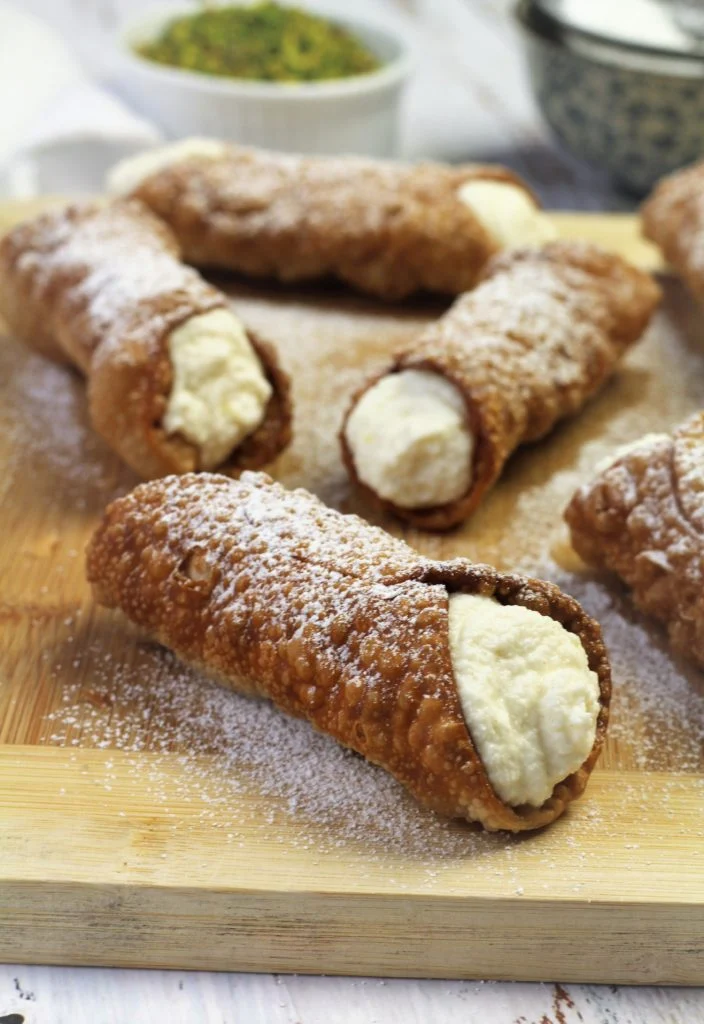
As St. Benedict the Moor was a resident of Palermo, it seems fitting that you celebrate his Feast Day with a traditional Sicilian food:
This is one of the more complicated recipes I've shared, so I suggest you visit the link above for helpful tips and advice not included below:
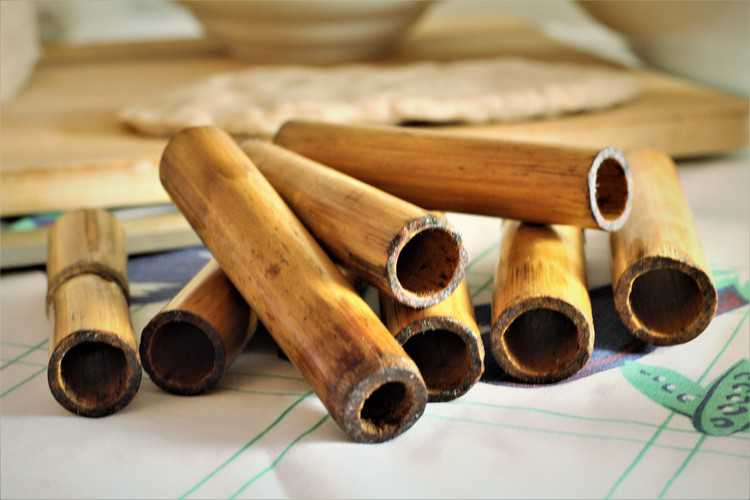
Cooking Tools:
To make cannoli shells, cannoli forms or molds are required to wrap the dough around for frying.
Ingredients:
For the shells:
All-purpose flour
Granulated sugar
An egg: plus an egg white for sealing the dough
Milk
Red wine: may be replaced with Marsala
Vegetable oil: both in the dough and for deep frying the shells. Sunflower or canola oil may be used instead
For the ricotta filling:
Whole milk ricotta: strained if it is too watery
Powdered sugar: dissolves much better than granulated sugar in the ricotta
Ground cinnamon: for a touch of flavor
Dark chocolate chips: for garnishing (optional)
Chopped pistachios: for garnishing (optional)
Powdered sugar: for dusting prior to serving
STEP BY STEP INSTRUCTIONS:
PREPARE THE RICOTTA CREAM FILLING:
If using a brand of ricotta that has a lot of moisture, place the ricotta in a fine mesh sieve lined with cheese cloth over a bowl. Refrigerate and let drain for at least 2 hours.
Place the strained ricotta in a bowl, add powdered sugar, cinnamon and whisk until smooth.
Please note that ricotta is known for it's grainy texture and therefore it is normal that the mixture will not be smooth as mascarpone cheese, for example, or whipped cream.
I prefer my ricotta filling not too sweet. Taste the filling and add additional sugar, if necessary, according to taste.
Refrigerate while you prepare the cannoli shells.
PREPARE THE DOUGH:
Stir together flour and sugar in a large bowl.
Make a well in the center and pour in the milk; vegetable oil; red wine and egg.
Use a fork to beat the wet ingredients and slowly begin to incorporate the dry ingredients to form a dough.
Knead on a lightly floured surface until smooth, about 5 minutes.
SHAPE THE CANNOLI SHELLS:
This dough does not require a resting period and can be rolled immediately.
Divide the dough into 4 pieces. Work with one piece of dough at a time and keep the remaining pieces covered to prevent from drying out.
Use a pasta roller or a rolling pin to roll out the dough as thin as possible, until second to last setting if using a pasta roller.
Sprinkle the dough with flour, as needed, to prevent from sticking
Cut 4-inch dough circles with a cookie cutter. Alternately, use anything you have on hand with a similar sized opening such as this cup my mom uses!
Reroll scraps of dough and continue until all the dough is used up.
Wrap the circles around the cannoli molds and use a beaten egg white to seal the ends.
FRY THE CANNOLI SHELLS:
Heat about 2 inches of vegetable oil (canola or sunflower oil work well) in a large heavy bottomed pot, or deep fryer if you have one. To verify if the oil is hot enough, try out my mother's technique: place the handle of a wooden spoon in the center of the pot. If the oil immediately begins to bubble vigorously around the handle, it is hot enough!
Carefully place 3 or 4 shells at a time, without overcrowding the pot, in the hot oil.
The challenge in frying the shells is that they sometimes roll over when you try to flip them to brown the opposite side. We often found ourselves keeping one side down with a fork or thongs.
If they were not adequately sealed with the egg white, some shells may unwrap themselves from the molds while frying. You can use those to make deconstructed cannoli by simply layering two or three with ricotta filling in between!
The shells are ready when they are golden brown and bubbly.
Use 2 paper towels to carefully separate the molds from the shell. Be careful, they will be extremely hot! You may want to purchase an additional set of cannoli molds to have enough on hand.
Rewrap the remaining dough circles around the molds and continue frying.
FILL THE CANNOLI SHELLS:
Only fill the cannoli shells with the ricotta cream once they are completely cooled.
Fill a pastry bag, fitted with a star or round tip attachment, with the ricotta cream.
Alternately, use a freezer bag with the tip cut off.
Pipe the cream at both ends of each cannoli shell making sure that the cream reaches the center of the shell.
Top the ends with chopped pistachios and chocolate chips (optional).
Dust with powdered sugar before serving.
Fill up to 2 hours before serving.
What is a prayer you might say for the Feast day of St. Benedict the Moor?








No comments:
Post a Comment